Abstract Vector Watercolor Style: Precision, Texture, and Scalable Artistry
Abstract Vector Watercolor Style merges the organic spontaneity of hand-painted watercolor with the technical precision of vector graphics. It is not a simulation or filter effect—it’s a deliberate artistic method where each pigment bleed, granulation, and ink spot is carefully drawn using vector paths, then refined to retain the expressive looseness of traditional media. Unlike raster-based watercolor brushes or layered Photoshop textures, this style maintains crisp edges and fluid gradients at any scale, without pixelation or loss of fidelity.
What Sets Abstract Vector Watercolor Style Apart
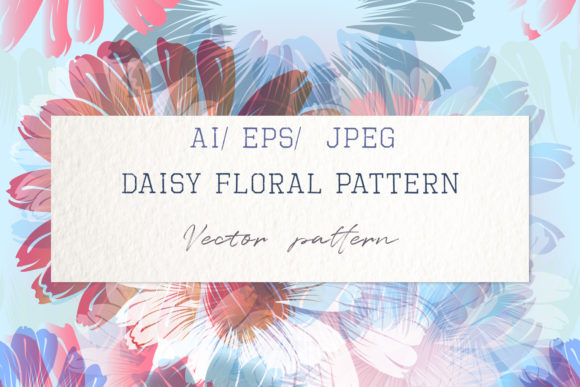
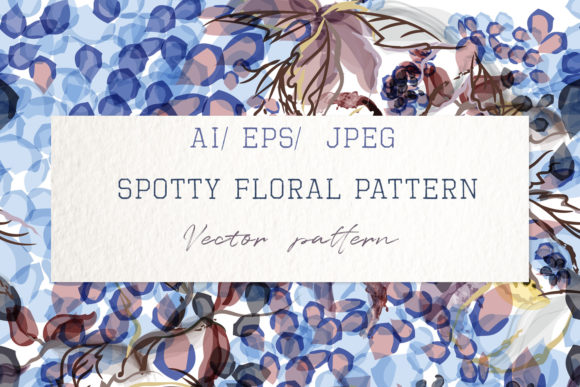
The defining trait lies in its duality: it behaves like vector art (infinitely scalable, editable, path-based) while visually echoing the tactile qualities of real watercolor—translucency, soft edges, subtle blooms, and irregular ink spatters. The “ink spots” often included are not random noise but intentional vector shapes—some with variable opacity, others with delicate Gaussian blur applied in a non-destructive way inside the vector file. This level of control allows designers to adjust saturation, contrast, or spacing without degrading quality.
Because each element is constructed—not scanned or traced—the resulting patterns remain fully editable. You can isolate a single watercolor wash, recolor it in seconds, or reposition an ink spot without affecting surrounding layers. That’s a meaningful distinction from high-resolution scanned watercolor textures, which lock you into fixed dimensions and fixed color relationships.
How It Compares With Related Approaches
When evaluating design resources for fabric, wallpaper, or stationery, three broad categories commonly arise: raster watercolor textures, hand-drawn vector illustrations, and generative or AI-assisted abstract patterns. Abstract Vector Watercolor Style sits between the first two—but leans decisively toward intentionality and craft.
- Raster watercolor textures offer rich authenticity and natural variation but impose hard limits on scaling and editing. A 300 dpi scan may look excellent on a greeting card, but printing it across a 12-foot wedding backdrop risks visible pixelation unless heavily upscaled—with inevitable softness or artifacts.
- Generic vector illustrations (e.g., flat geometric abstractions or line-only motifs) provide scalability and clarity but lack the atmospheric depth and visual warmth that watercolor conveys—especially important for wedding décor, luxury packaging, or boutique textile lines.
- AI-generated abstract patterns can produce novelty quickly, yet they often miss the nuanced balance of negative space, pigment density, and compositional rhythm found in hand-crafted vector watercolor work. They also rarely deliver production-ready, seamless repeats or layered transparency handling out of the box.
In contrast, Abstract Vector Watercolor Style delivers both fidelity and feeling—scalable geometry paired with perceptible human touch. It avoids the rigidity of pure vector abstraction and the fragility of raster fidelity.
Practical Strengths for Real-World Use
For fabric designers, the seamless repeat capability is essential—and built-in. Each pattern tile aligns precisely at its edges, allowing continuous tiling across yards of cotton, silk, or linen without visible seams or misaligned bleeds. Because the underlying structure is vector, adjusting repeat size (e.g., shifting from a 12″ × 12″ to a 24″ × 24″ tile) requires only resizing the artboard—not redrawing or resampling.
Wedding stationers benefit from the format’s flexibility: a single Abstract Vector Watercolor Style motif can serve as a background for invitations, be cropped into a monogram frame, scaled down for envelope liners, or converted to foil-stamping plates—all without quality loss. The included JPEG preview (5000 × 5000 px) supports quick mockups and client presentations, while the native .ai and .eps10 files ensure compatibility with professional print workflows, including those requiring CMYK separation or spot-color mapping.
Designers working across platforms appreciate the multi-format delivery. Adobe Illustrator CS2 compatibility means older studio systems or freelance collaborators using legacy software aren’t excluded. EPS10 ensures broader cross-application support—including CorelDRAW and Affinity Designer—without sacrificing transparency or gradient fidelity.
Tradeoffs and Considerations
No approach is universally optimal. Abstract Vector Watercolor Style excels when consistency, scalability, and editable texture matter most—but it does require familiarity with vector tools to unlock full potential. Someone needing only static, one-off backgrounds may find the editable layers unnecessary overhead compared to a well-optimized JPEG or PNG.
It also assumes a preference for curated variation over infinite randomness. While 100 unique vector artworks offer breadth, they don’t auto-generate new combinations like algorithmic tools might. If your workflow depends on rapid iteration across dozens of colorways or layout configurations, pairing these vectors with a modular design system (e.g., separating base washes from ink overlays) yields better efficiency than treating each file as a standalone unit.
Also note: “hand-drawn characteristics” here refer to aesthetic intent—not literal digitized sketches. These are clean, intentional vector constructions. If you specifically need the irregular line weight or pressure sensitivity of a tablet sketch, a stylus-based vector illustration would be more appropriate—even if it sacrifices some of the polish and repeatability built into Abstract Vector Watercolor Style patterns.
Where This Style Fits Best—And Where It Doesn’t
This style shines in contexts where emotional resonance meets technical rigor. Think: bridal shower backdrops printed on sheer voile, limited-edition wrapping paper with metallic ink accents, or custom wallpaper for a boutique hotel lobby—where clients expect both artisanal charm and flawless execution at large scale.
It’s less suited for fast-turnaround social media templates where ultra-lightweight files (<500 KB) are mandatory, or for applications requiring photorealistic texture simulation (e.g., mimicking aged paper or canvas weave), where high-res raster overlays still hold advantages.
Another boundary: if your project calls for strict brand guidelines with rigid color palettes, verify whether the provided vectors use global swatches or embedded RGB/CMYK values. Some files allow one-click recoloring; others require manual adjustment per layer. Checking the file structure before purchase avoids surprises during production handoff.
Making an Informed Choice
Ask yourself three questions before selecting Abstract Vector Watercolor Style assets:
- Do I need the pattern to scale seamlessly across multiple physical sizes—from business cards to wall murals? If yes, vector-native construction is functionally necessary—not just convenient.
- Will I modify colors, crop elements, or integrate parts into larger compositions? Editable layers and separated components (e.g., washes vs. ink spots) significantly reduce production time versus flattened alternatives.
- Is atmospheric subtlety—soft transitions, layered translucency, organic imperfection—a core part of the visual message? Then this style delivers nuance that flat vector shapes or generic abstracts often lack.
If the answer to two or more is “yes,” Abstract Vector Watercolor Style is likely aligned with your goals. If your priority is speed over refinement—or photorealism over stylized interpretation—other formats may serve better.
Ultimately, the value isn’t just in what the files contain, but in how they extend your creative control. Whether you’re developing a signature textile line or sourcing decor for a milestone celebration, having 100 thoughtfully constructed, production-ready vector artworks gives you room to explore—not just execute.