Hand Drawn Tropical Flowers in Vintage
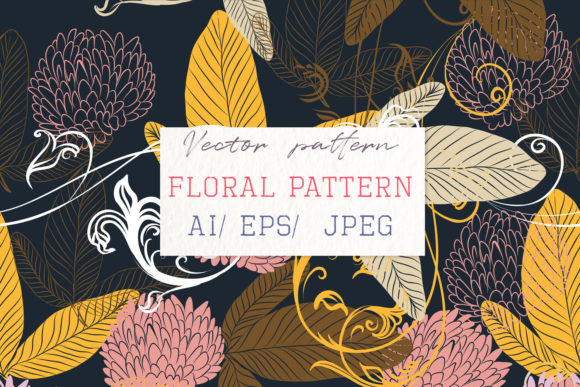
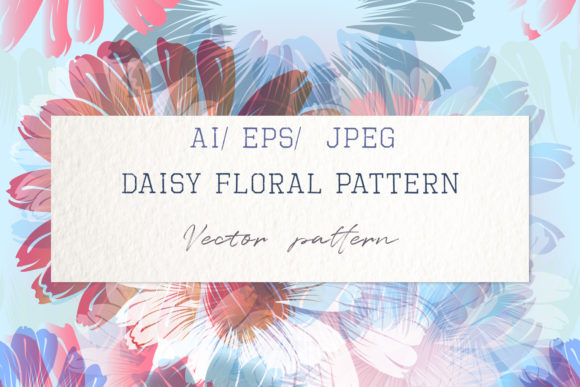
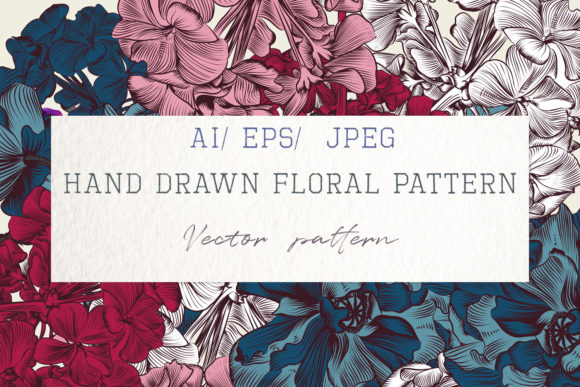
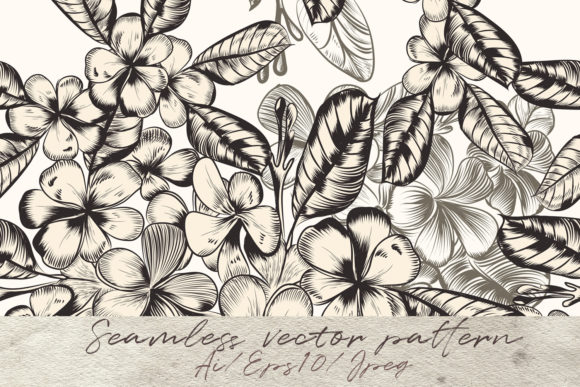
If you’ve ever spent hours searching for a floral pattern that feels both lush and timeless—something that whispers “Hawaii sunset” but also nods to a 1940s botanical postcard—you know how rare it is to find that sweet spot between organic charm and refined elegance. Hand Drawn Tropical Flowers in Vintage isn’t just another clipart pack. It’s 100 meticulously hand-drawn vector motifs—hibiscus, bird-of-paradise, plumeria, monstera leaves, ginger blooms—all rendered with visible pencil texture, subtle ink bleed, and intentional imperfection. No sterile symmetry. No AI smoothing. Just the warmth of human touch, scaled infinitely without losing a single curl of a petal.
Where This Pattern Fits Like It Was Made for You
Think about your last big creative project: maybe you designed wedding invites for a friend getting married on a Maui cliffside, or printed fabric for a small-batch line of resort wear, or even refreshed your café’s seasonal menu board with something that felt sun-drenched but sophisticated. In each case, generic stock florals fell flat. They looked digital. Too perfect. Too forgettable. Hand Drawn Tropical Flowers in Vintage solves that—not as decoration, but as atmosphere. Its seamless repeat means you can tile it across a 12-foot banquet runner or shrink it into a delicate border on a thank-you card—and it holds its character at every size.
Weddings That Breathe, Not Broadcast
For wedding designers and DIY couples alike, this set works where others don’t: it adds romance without saccharine cliché. Imagine printing the pattern on ivory linen napkins—soft enough to feel like heirloom cotton, bold enough to hold up under candlelight. Or using just three elements (a frangipani, a fern frond, and a trailing vine) to frame a watercolor ceremony program. Because each flower is individually layered and editable in Illustrator, you can pull out one bloom, recolor it in sage and blush, and drop it onto a minimalist invitation suite—no trace of “clipart,” just intention.
Fabrics That Tell a Story
Small-batch apparel makers and textile designers rely on patterns that translate well to fabric printing—especially when working with natural fibers like linen or Tencel. The high-detail linework in Hand Drawn Tropical Flowers in Vintage holds up beautifully on reactive-dye prints, where fine strokes often blur or disappear. One indie swimwear brand used the monstera motif at 30% scale across a navy base for their summer collection; customers didn’t just say “pretty”—they said, “It looks like it was sketched on a beach notebook.” That’s the difference hand-drawn authenticity makes.
Digital Spaces With Texture and Soul
Bloggers and educators building online courses about tropical botany, sustainable gardening, or vintage design history often struggle to make slides or workbooks feel cohesive—not clinical. Using the JPEG preview (5000×5000 px) as a subtle background layer behind text gives presentations depth without distraction. A biology teacher embedded the plumeria vector into a lesson on pollination adaptations, then animated just the stamen—keeping everything vector-based so it stayed crisp when projected on a classroom smartboard. No pixelation. No licensing worries. Just clarity with character.
What You Actually Get—and Why Format Matters
You receive three files: an Adobe Illustrator CS2 file (fully layered, named groups, editable strokes), an EPS10 file (compatible with CorelDRAW, Affinity Designer, and older systems), and a high-res JPEG preview. That might sound technical—until you’re in the middle of a client revision and need to swap out a single leaf color in five seconds flat. The Illustrator file lets you do that. The EPS ensures your print shop won’t choke on transparency effects. The JPEG? That’s what you email to a vendor who only asks for “a visual.” No guesswork. No lost time.
Real Talk: What to Consider Before You Use It
This isn’t a “drag-and-drop-and-done” resource—if you want to get the most from it, you’ll need basic vector literacy. You don’t need to be a designer, but you should know how to open an .ai file in Illustrator or Affinity, select an object, and change its fill color. If you’re planning to use it for commercial products (like mugs or tote bags), rest easy: the license covers unlimited personal and commercial use—no royalties, no attribution required. But if you’re building a competing pattern pack or reselling the vectors as-is, that’s not permitted. Fair use means honoring the craft behind them.
When “Vintage” Isn’t Just Aesthetic—It’s Function
The vintage styling does more than look nice. Those slightly uneven stems, the tapered line weight, the gentle overlap of petals—they create natural visual hierarchy. That means when you use the pattern as wallpaper in a boutique hotel lobby, guests’ eyes move *through* the design instead of bouncing off it. When applied as a subtle watermark behind a newsletter signup form, it adds warmth without competing with the CTA. It’s quiet confidence, not loud decoration.
Who Benefits Most—and How They Use It Differently
- Freelance stationery designers extract individual blooms to build custom monograms—pairing a vintage hibiscus with a modern sans-serif for contrast that feels intentional, not accidental.
- Educators creating printable plant ID cards use the vector outlines as tracing templates for students, then add scientific names in clean type—bridging art and accuracy.
- Small business owners refreshing their branding apply the pattern as a sublimation backdrop for reusable shopping bags—making sustainability feel joyful, not austere.
- Hobbyists making greeting cards combine two motifs in a corner layout, then print on textured cardstock—the hand-drawn lines echo the paper grain, deepening the tactile experience.
None of this requires a studio or a budget. Just access to free or low-cost vector tools (Inkscape, Affinity Designer, or even the free trial of Illustrator), a clear idea of where warmth and authenticity matter more than speed or sameness—and the willingness to treat pattern not as filler, but as voice. Hand Drawn Tropical Flowers in Vintage doesn’t shout. It invites. And in a world saturated with algorithmically generated visuals, that kind of quiet resonance is increasingly rare—and increasingly valuable.