Cool Cat Collection
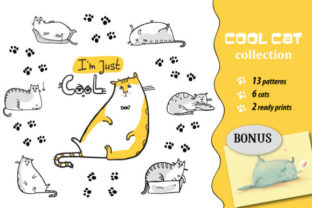
The Cool Cat Collection is a curated set of digital design assets featuring stylized cat illustrations. It includes 13 total patterns—8 primary and 5 additional—each rendered in distinctive color schemes. The collection delivers files in multiple formats: JPG and PNG for raster-based use, EPS for vector scalability, and PSD for layered editing. All are supplied at 300 DPI resolution and CMYK color mode, making them suitable for professional print applications such as T-shirts, mugs, tote bags, or stationery. A bonus poster (PSD and JPG) and six individual cat illustrations (PSD and PNG) are also included.
This collection reflects a lighthearted, confident feline persona—capturing the quiet self-assurance many cat owners recognize: the cat who eats, sleeps, occasionally plays, and spends much of its time simply *being*. Not frantic or demanding, but composed, calm, and undeniably cool. That tone informs the aesthetic: clean lines, balanced composition, and intentional color palettes that avoid clutter while retaining visual interest.
Who Might Find Value in This Collection?
Designers, small-batch apparel makers, craft entrepreneurs, and educators working on creative projects may find the Cool Cat Collection practical for specific use cases. Its appeal lies not in novelty alone, but in consistency and production-readiness. Because all assets share a unified style and technical specification—CMYK color space, 300 DPI, print-optimized formats—the collection reduces prepress troubleshooting when moving from screen to physical output.
For example, someone launching a limited-run line of cat-themed merchandise could use the patterns directly for fabric printing or screen-printed T-shirts. The EPS files scale cleanly to any size without quality loss, and the PSD layers allow selective editing—adjusting background tones, isolating elements, or integrating cats into larger layouts. The bonus poster and individual cat files add flexibility for wall art, social media graphics, or classroom visuals.
Practical Benefits and Realistic Expectations
One benefit is time efficiency. Rather than commissioning custom illustrations or sourcing disparate assets, users receive a coordinated set designed to work together. The color variations across patterns help avoid visual repetition in multi-item product lines—say, pairing one pattern on a mug and another on a notebook without clashing.
However, it’s important to note limitations. The collection does not include editable source files for the typography (if any text appears), nor does it offer licensing for resale of the designs *as-is* without modification. Users should review the license terms carefully—especially if planning commercial distribution beyond personal or small-scale business use. Also, while the cats convey personality, they follow a consistent stylistic approach; those seeking highly varied expressions (e.g., realistic, cartoonish, minimalist, or surreal interpretations) may find the range intentionally narrow.
Another consideration: file compatibility. EPS files require vector-editing software like Adobe Illustrator to modify fully. Users relying solely on free or web-based tools may find PNG and JPG versions more immediately usable—but with less flexibility for resizing or recoloring. The PSD files assume familiarity with layer management in Photoshop or compatible editors.
When This Collection Fits Well
The Cool Cat Collection is a strong fit for users who need cohesive, print-ready cat motifs and already have basic design workflow knowledge. It suits scenarios where:
- A small business wants to launch a themed product series quickly, without outsourcing illustration;
- An educator needs engaging, high-resolution animal visuals for classroom posters or handouts;
- A hobbyist plans DIY home goods—like iron-on transfers or sublimation prints—and values predictable color fidelity;
- A designer seeks supplemental assets to pair with original typography or photography, rather than building entire compositions from scratch.
In these situations, the collection’s consistency, technical readiness, and thematic focus reduce decision fatigue and streamline production.
When Alternatives May Be Worth Exploring
Users with different goals may want to look elsewhere. For instance:
- If you need customization beyond color or layout—such as adding specific breeds, accessories, or contextual scenes—the collection’s fixed illustrations won’t accommodate that without significant manual editing.
- If your project requires web-first assets (e.g., SVG icons, responsive patterns, or animated elements), the raster-heavy format mix and CMYK orientation make this less ideal than web-optimized alternatives.
- If licensing scope is critical—for example, creating NFTs, selling digital templates, or producing mass-market retail goods—a royalty-free marketplace with broader usage rights might offer more flexibility than this single-collection license.
- If you prefer modular or generative design systems, where patterns adapt dynamically to size or content, this static set offers no algorithmic variation—it’s a fixed library, not a toolset.
Making an Informed Choice
To determine whether the Cool Cat Collection aligns with your needs, ask three questions:
- What’s my end use? If it’s physical print output at standard sizes (e.g., 8×10" posters, 12×16" T-shirt prints), the provided specs match common industry requirements. If it’s digital-only or large-format printing (e.g., banners over 36"), verify that the EPS vector files meet your scaling needs before purchase.
- What’s my editing comfort level? Review the file types against your available software. Can you open and adjust PSD layers? Do you have access to Illustrator for EPS edits? If not, prioritize whether the JPG/PNG versions—with their fixed colors and dimensions—still meet your functional requirements.
- How much thematic variety do I actually need? The 13 patterns offer thoughtful color diversity, but not stylistic divergence. If your brand voice demands irony, nostalgia, or cultural specificity (e.g., Japanese neko, Art Deco cats), evaluate whether the collection’s confident, contemporary tone supports that—or whether mixing assets would dilute cohesion.
Finally, consider testing one pattern first—if a preview or sample is available—by placing it into your intended workflow: import it into your design software, simulate a print output, and assess how easily it integrates with your existing assets. That hands-on check often reveals more than feature lists alone.
In summary, the Cool Cat Collection serves a clear niche: designers and makers who value ready-to-use, visually aligned cat illustrations optimized for print. It trades broad stylistic range for executional reliability—a reasonable tradeoff when speed, consistency, and technical readiness matter most.